What Items Can a Courier Legally Transport in the UK?
Using a courier requires understanding which items are restricted or banned under UK law. DHL, Royal Mail, and other couriers follow strict posting rules. This guide outlines restricted and prohibited goods, how to comply, and how to pack your parcel safely.
What are restricted items and prohibited items under UK law?
In the UK, prohibited items cannot be sent through any courier network. Restricted items can be sent but only under specific conditions, like particular packaging or required documentation.
Courier companies usually publish a guide showing prohibited and restricted goods. Using this list can protect your parcel from delays, penalties, or confiscation.
Why is compliance important when sending a parcel?
Compliance with UK law protects you, the courier, and the public. The transport of dangerous goods falls under national and international regulations, including guidance published by the International Civil Aviation Organisation.
If your parcel contains dangerous goods and you fail to declare them, you risk breaching compliance rules. A shipment must be sent in compliance with UK safety standards to avoid penalties and refused collection.
What dangerous items and hazardous goods can’t be sent?
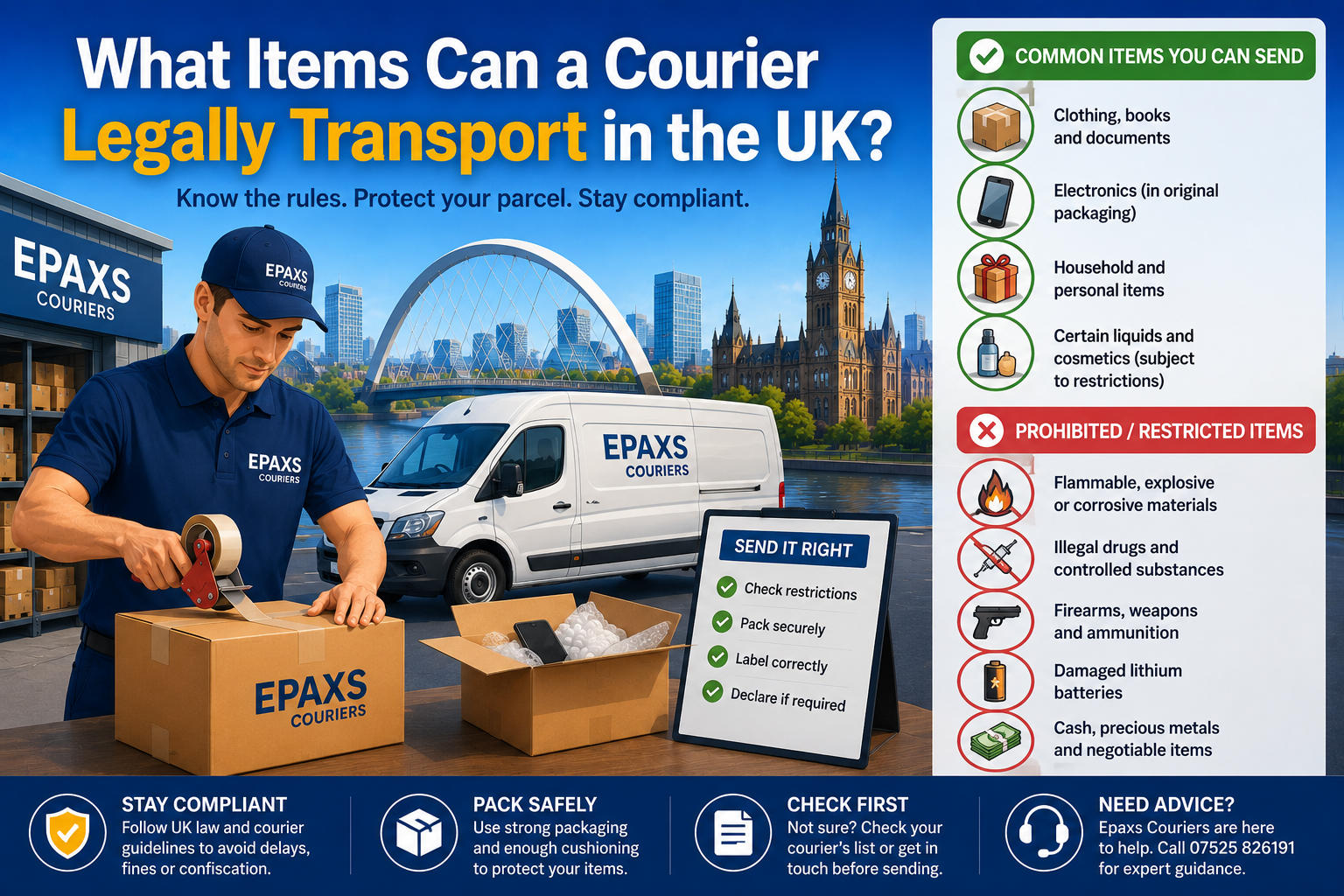
Dangerous items include flammable, corrosive, and hazardous materials. Items like petrol, fireworks, certain chemicals, and flammable liquid products are usually prohibited by law.
Dangerous goods by air face even stricter controls. Many courier services follow technical instructions for safe transport published by the international civil authorities, especially for UK and international deliveries.
Are liquids and aerosols always restricted?
Liquid items are not always banned, but they are often restricted goods. For example, certain liquid cosmetics or cleaning products may be allowed if correctly sealed and placed in secure outer packaging.
An aerosol can also be flammable or hazardous. Depending on the courier, you may need clear labelling and documentation. Always check with your courier before sending any liquid or aerosol product.
Can you send lithium batteries and electronic devices?
Lithium batteries are one of the most common restricted or prohibited categories. Many everyday items include lithium batteries, such as a mobile phone or other electronic device.
You can usually send these items if they remain in their original packaging and are well-cushioned. However, items with damaged lithium batteries are strictly banned because of fire risks in transit.
What does the list of prohibited items usually include?
Common prohibited items include explosives, firearms, illegal drugs, and some hazardous chemicals. High-value goods like large sums of cash or precious metals may be listed as restricted items.
Royal Mail’s and DHL Express policies differ slightly, so you should review each items list carefully. The UK prohibited items list may also change based on security guidance.
Can you send household and personal items by courier?
Many household items and personal items are perfectly acceptable. Clothing, books, and electronics in retail packaging are common parcel contents.
However, perishable items or fragile items may be restricted. You must ensure your items are packed with sufficient cushioning material and proper outer packaging to prevent tainting of other items.
Are there different rules for UK and international shipping?
Rules vary between delivery within the UK and international shipping. Some items may be restricted or prohibited only when sent overseas.
DHL and other major courier providers follow additional aviation rules for dangerous goods by air. Many UK senders do not realise that certain goods allowed across the UK may be banned for international shipment.
What about sending items through Royal Mail or DHL?
Royal Mail and DHL both publish lists of restricted and prohibited or restricted categories. You may be able to send in the post some items that another courier would refuse.
Depending on the courier, an item must meet packaging and labelling standards. If you can’t send something through one provider, another courier service may offer an approved solution, subject to compliance checks.
How can you check if your parcel is allowed?
Before booking, review the list of items on your chosen courier website. Know what’s allowed and confirm whether your goods are restricted items or a prohibited item category.
If you are unsure, contact a professional courier before sending. Epaxs Couriers provides clear advice on items prohibited and restricted goods across the UK.
Epaxs Couriers helps businesses and individuals send important parcels while staying fully compliant with regulations. Our same day courier service helps you move many items safely, provided they are not prohibited from being sent.